
The Hundred Hold
Lie on your back, with legs raised to an angle of about 45° to the floor (or 90° for a simpler version) activate the core by contracting the abdominals while lifting the head, shoulders and shoulder blades slightly off the floor. The arms remain stretched across the body, raised a few inches off the floor, parallel to the legs. You hold this position while stabilizing the trunk and breathing in a controlled manner.
Media
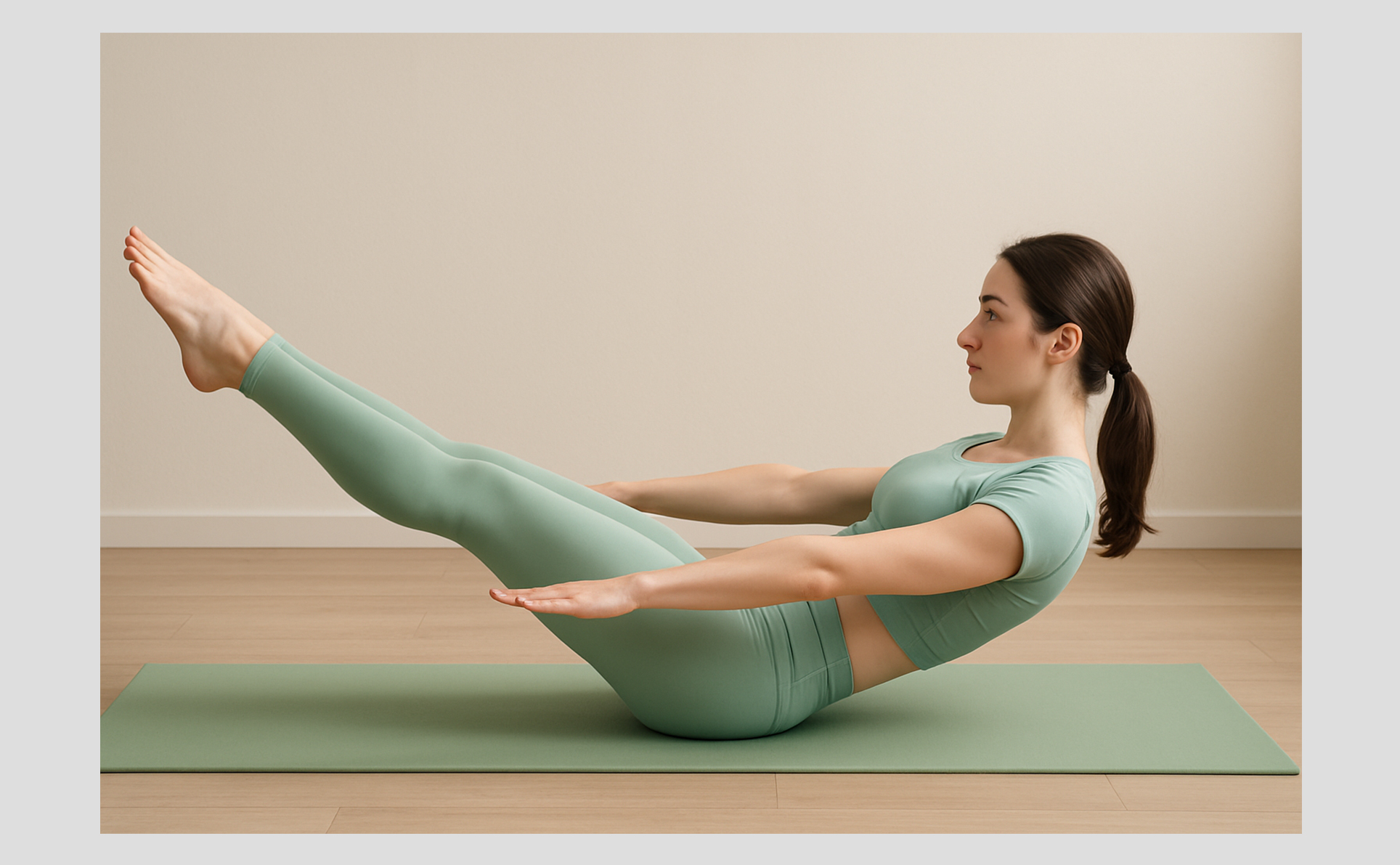
Instructions
On a mat lying on your back, place your arms along your sides and palms facing down.
Bend your legs while keeping your feet on the floor.
Lift one leg at a time in a plank position (90° hips and 90° knees).
Extend legs to 45° .
Keep legs active and together, toes outstretched.
Inhale deeply, then exhale while lifting head, neck and shoulders off the mat.
Keep Chest open, gaze toward knees, and lumbar area tight to the mat (avoid arching).
Raise your arms about 5-10 cm off the mat, taut and parallel to the ground.
Fingers are active, pointing toward the feet.
Begin pulsing arms up and down in small, quick movements, about 6 inches.
Coordinate the movement with breathing: Inhale for 5 pulsations and exhale for 5 pulsations. Repeat for a total of 100 pulsations (hence the name).
Exit the position: Lower your arms slowly along your sides, without dropping them suddenly. Bend your knees, if they were extended, and bring your feet slowly back to the floor (one leg at a time if necessary). Gently rest your head, shoulders and finally upper back on the mat, vertebrae by vertebrae.
Bring your hands to your abdomen and take 2-3 deep breaths to relax the diaphragm and unload the lower back.
Exercise Details
Repetitions
3/4 reps
Hold Time
60 seconds
Breathing
Regular, coordinated with movement. Breathe in and out deeply while maintaining the position.
Important Warnings
People with neck strain:
Lifting the head, shoulders and neck can quickly fatigue those with neck weakness. Resting the head on the ground or supporting it with the hands is recommended.
People with lower back problems:
The exercise requires keeping the lumbar area adhered to the mat. Those with low back pain or abdominal weakness may compensate incorrectly. It is advisable to keep the legs bent or in a "plank" position rather than outstretched. Do not force.
People with abdominal diastasis or postpartum:
In the presence of diastasis of the rectus abdominis (frequent in postpregnancy), exercise could increase intra-abdominal pressure. It is recommended to avoid exercise and choose gentler alternatives.
People with dizziness or hypotension:
Prolonged maintenance with the head elevated may cause dizziness. It is recommended to lift the head only if stable, otherwise keep it resting on the ground.
People with cardiovascular or respiratory problems:
Controlled breathing can be difficult for those with asthma or respiratory disorders. It is also an exercise that stimulates circulation, so to be avoided in some postoperative cases. Slower, shallower breaths and shorter duration are recommended.
Pregnant women:
Position is not recommended from the second trimester onward.
Quick Info
Related Exercises
Intermediate • 2min
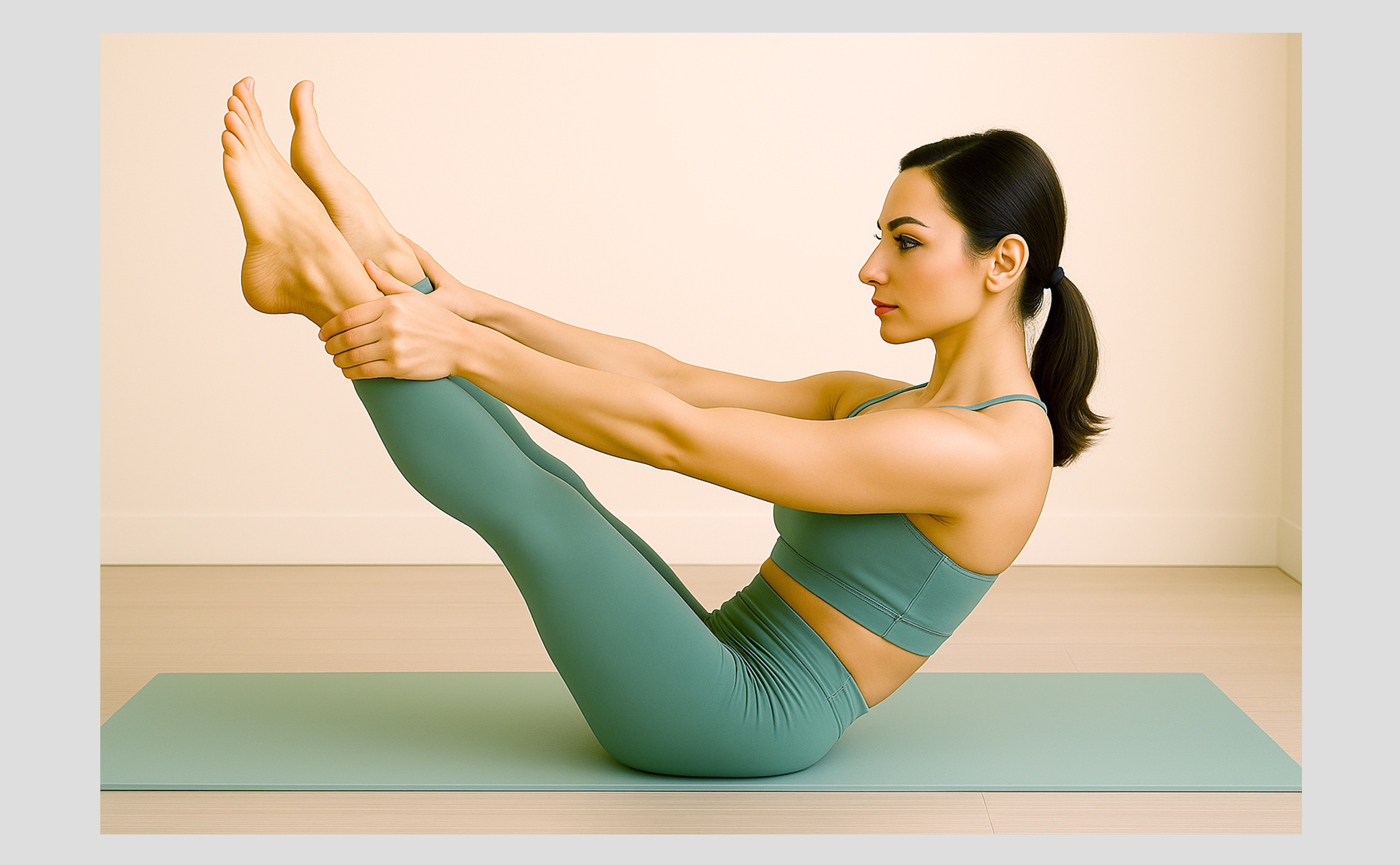
Advanced • 2min
Intermediate • 3min
Intermediate • 2min