
Plank
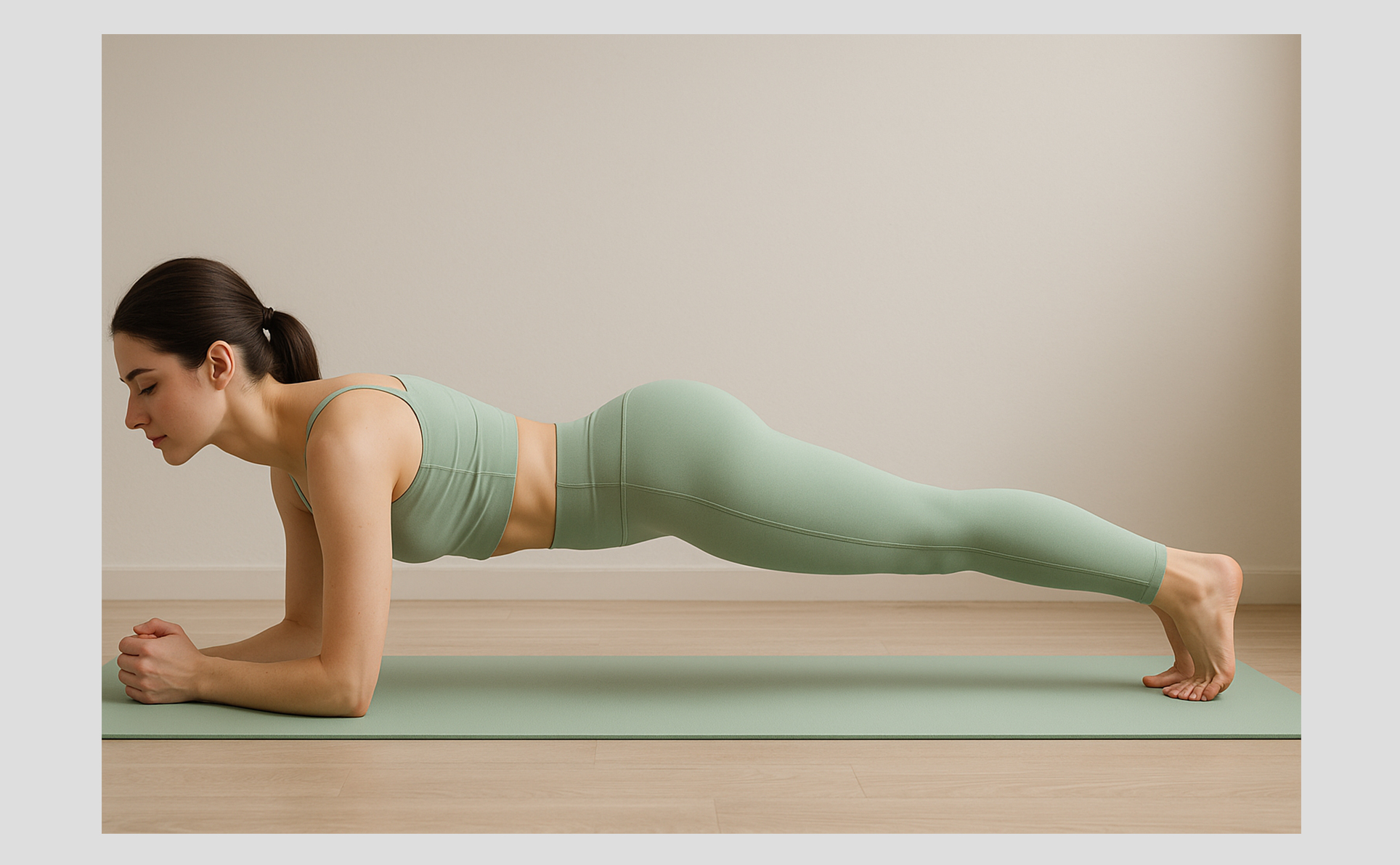
On the ground in support of the forearms and toes. The body forms a straight line from head to heels, without excessively raising or lowering the pelvis. The forearms should be parallel to each other or with the hands together, and the elbows aligned below the shoulders. The position is maintained by contracting the abdomen and buttocks, avoiding sagging in the lower back.
Media
Instructions
Stand on all fours: elbows under shoulders with forearms resting on ground, knees under hips.
Extend one leg at a time back: Extend first one leg, then the other, resting your toes. Keep legs extended and heels pushed back.
Align the body: The body should form a straight line from head to heels. Avoid lifting the buttocks too high or bringing them down.
Activate the core: Contract the abdominal muscles (as if you wanted to pull the navel toward the spine). Also activate the glutes and thighs.
Check shoulders and neck: Push the floor with your hands, pulling your shoulder blades away. The neck is in line with the spine: look toward the mat, slightly forward.
Regular breathing: Inhale and exhale deeply, maintaining control.
Exit the position: Slowly bend your knees to the floor and regain your initial four-legged alignment.
Exercise Details
Repetitions
3/4 reps
Hold Time
60 seconds
Breathing
Regular and controlled.
Important Warnings
People with Lower Back Pain or Abdominal Weakness:
Incorrect holding (arched back) can overload the lower back, which can lead to pain or worsen low back pain. It is recommended to start with the variation with the knees on the floor, activate the core well and keep the back neutral.
People with abdominal hernia or diastasis of the rectus:
Plank generates high intra-abdominal pressure and may aggravate existing or unstabilized conditions. It is contraindicated without medical or physical therapy supervision.
People with cervical fatigue or shoulder instability:
The position requires scapular stability and cervical alignment. It can cause neck, trapezius or shoulder strain, especially if performed for too long. Looking forward or recessed shoulders are recommended.
Pregnant women:
Not recommended after the first trimester, nor immediately after delivery if there is diastasis. It is recommended to replace with safer and more controlled core exercises.
Related Exercises
Intermediate • 2min
Intermediate • 3min
Intermediate • 3min
Intermediate • 3min