
Single-Leg Stretch Hold
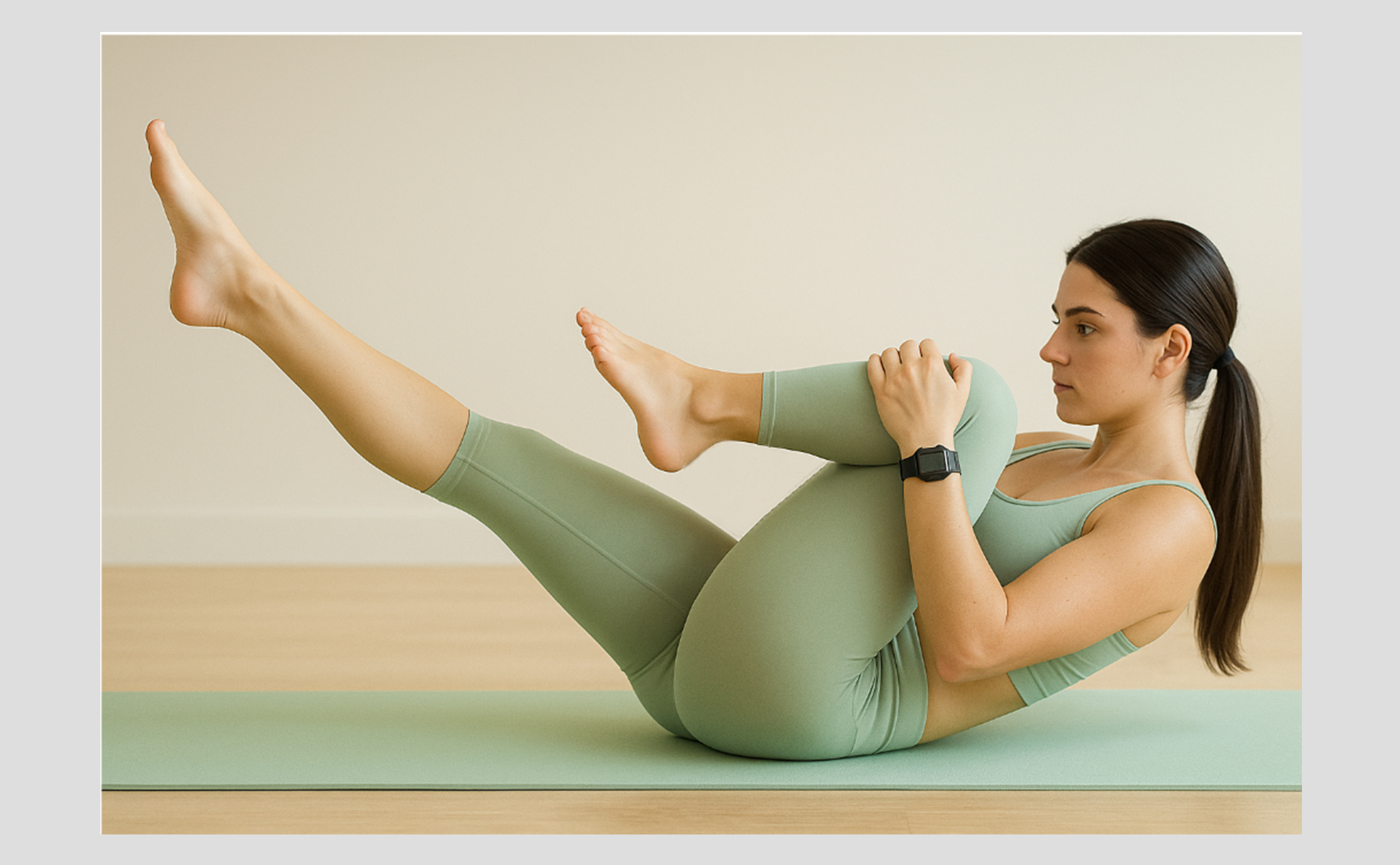
Lying supine, one knee is brought to the chest while the other leg is extended forward about 45° above the floor. The head, shoulders and shoulder blades are raised off the floor, keeping the neck relaxed. The hands grasp the shin of the bent leg to stabilize it. With the core active, you hold the position while controlling the entire movement.
Media
Instructions
Lie supine with legs bent, feet flat on the floor and arms relaxed along the sides.
Inhale deeply and, while exhaling, activate the abdomen by pulling the navel toward the spine and bring the chin slightly toward the chest to align the neck.
Raise both knees to 90° (tabletop position), keep your shins parallel to the floor and your lower back in a neutral or slightly flattened position.
Lift your head, shoulders and shoulder blades off the mat keep your neck long and shoulders away from your ears.
Extend one leg forward about 45° above the ground while the other leg remains bent with the knee to the chest, grasp the shin of the bent leg with your hands (outside hand on the ankle, inside hand on the knee).
Hold the position while breathing regularly.
Exit the position: Slowly bring your outstretched leg back to tabletop position (90° knee), inhale deeply, then exhale as you lower your head, neck and shoulders. Bring one leg at a time to the floor, with feet supported and knees bent. Place your hands along your hips and completely relax your core and neck and breathe deeply.
Exercise Details
Repetitions
3/4 reps
Hold Time
40 seconds
Breathing
Regular and controlled. Inhale when changing legs, exhale while maintaining control.
Important Warnings
People with lower back problems:
Those with low back pain, hernias, or pronounced lordosis may experience pain or hyperextension during exercise. It is recommended to keep the back in neutral or imprint and raise the extended leg more to reduce the load.
People with cervical problems:
Elevation of the head and shoulders can overload the cervical spine, especially if the neck is not well aligned. It is recommended that if neck pain occurs, exercise with the head resting on the floor or on a small support.
Pregnant women:
It is recommended to avoid in the second and third trimester of pregnancy and in case of abdominal diastasis, because it can increase intra-abdominal pressure.
Quick Info
Related Exercises
Intermediate • 4min
Intermediate • 3min
Intermediate • 2min
Advanced • 2min